OUR MUSEUM
SOCIAL
CONTACT US
ADDRESS
The Tarot Museum is part of Mutus Liber, a non-profit cultural association
Via Arturo Palmieri, 5 Riola
40038 Vergato (Bologna) Italy
Tel. 3349975005
Tax Code 91368630371 - VAT No. 03386331205
REA BO-554574
Pec: mutusliber@pec.mutusliber.it
International Tarot Museum/Mutus Liber
Via Palmieri 5
Riola Vergato (Bologna)
40038 - Tax Code 91368630371 - VAT Number 03386331205
Italy
MAGICAL BOLOGNA
TAROT HERMETICISM ART HISTORY
16 - 17 NOVEMBER 2024
MAGICAL BOLOGNA
Tarot Hermeticism Art History
Bologna is one of the capitals of the Middle Ages and the Renaissance. It boasts a high density of advanced studies and a complex circulation of knowledge. It is this horizon that inspires the conference MAGICAL BOLOGNA. Tarot Hermeticism Art History. Unpublished discussions and original voices unite Hermeticism with other disciplines, with a special focus on Tarot cards, a noble product of Neoplatonic philosophy and a repository of universal archetypes, which from Bologna have spread throughout the world.
The event is curated by Morena Poltronieri and Ernesto Fazioli (International Tarot Museum)
Free entry by reservation only: museodeitarocchi@gmail.com - 3349975005
International Tarot Museum©
SATURDAY, NOVEMBER 16, 2024
Auditorium Biagi Sala Borsa BOLOGNA MAGIC TAROT HERMETICISM ART AND HISTORY
SUNDAY, NOVEMBER 17, 2024
Morning: Odeon Cinema AT THE CINEMA WITH THE TAROTS - Afternoon: Conference Room MAMbo Museum of Modern Art Bologna ART HERMETICISM AND TAROTS
DOWNLOAD THE PROGRAM
Conference 2024 complete.pdf
PROGRAM
1st DAY
16 NOVEMBER INTERNATIONAL CONFERENCE
2nd DAY: AFTERNOON
17 NOVEMBER 2024
TAROT IN CONTEMPORARY ART
ART, HERMETICISM AND TAROT
2nd DAY: MATINÉE
17 NOVEMBER 2024
AT THE CINEMA WITH THE TAROTS
From 10:00 am to 6:00 pm
Tassinari Hall - Town Hall
Piazza Maggiore, Bologna
10:00 am Registration of participants
10:30 am: From Magical Bologna to the International Tarot Museum (Morena Poltronieri)
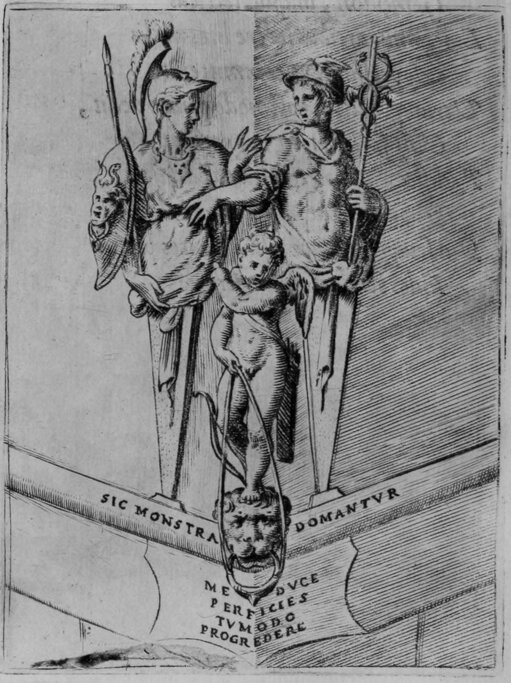
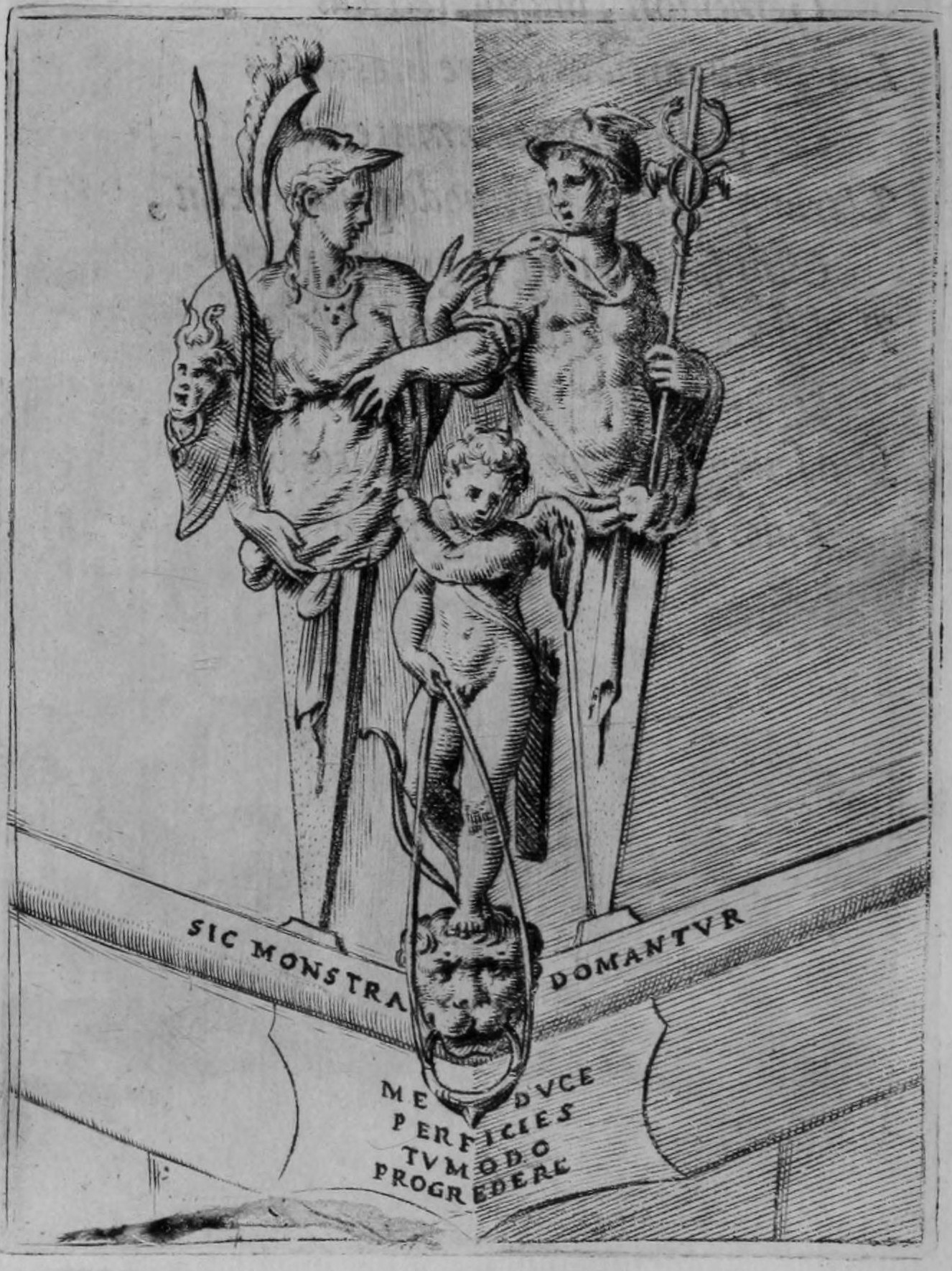
11:00 am: Lo insaciabile desiderio nostro: Bocchi's Hermatena and amorous wisdom
curated by Paola Goretti
Paraphrasing a famous letter in which Isabella d'Este proudly confessed her collector's craving (Lo insaciabile desiderio nostro di cose antique), Achille Bocchi's is also an insaciabile desiderio. Not for "things": naturalia, mirabilia, artificialia. But for Universal Knowledge—orthodox and heterodox—substantiated by the workshop of the ancients.
A learned humanist, precocious professor, creator of the unique palace on Via Goito (1546), of the Hermatena—a sort of Neoplatonic academy gathering a whole gallery of illustrious men—and of the Symbolicae Quaestyones (1555), one of the most complex emblem books ever, Bocchi's (1488-1562) project radiates a vision of totality. Theater of memory, virtuous gatherings, notandissimi secreti. The immense hieroglyph of the world still reveals itself, in the dream of the metamorphosing ancient.
11:40 am The Master's in Magic and Occult Sciences at the University of Exeter (U.K.)
curated by Emily Selove
The University of Exeter has launched a new Master's program in Magic and the Occult: a flexible degree that offers students the freedom to explore their specific interests within the long and diverse history of esotericism, witchcraft, ritual magic, and related topics. This lecture will explain the reasons behind the structure of the MA, exploring, for example, why it is based at the Institute of Arab and Islamic Studies, placing the Arab-Islamic cultural heritage at the center of these studies and in the history of the "West." To illustrate this latter point, some theories on the Middle Eastern origin of Tarot will be introduced.
12:20 pm Images and mystical experience in Christian Kabbalah: The homo verus and homo novus of Lodovico Lazzarelli
Curated by Flavia Buzzetta - Fondazione Hausbrandt – Laboratoire d’études sur les monothéeismes.
The talk will examine the notion of mystical experience in the early Christian Kabbalah of the Renaissance, through an examination of the theories expressing the intimate relationship between man and God and the techniques used to achieve ecstatic rapture. In particular, the Kabbalistic images used by Lodovico Lazzarelli (1447-1500) to express the path of asceticism and purification that allows man to recover his original nature and be reborn in the transfiguring encounter with the divinity will be presented. A contemporary of Giovanni Pico della Mirandola and Pierleone da Spoleto, progenitors of Christian Kabbalah, he was an eclectic humanist. Poet, philosopher, mystic, and Kabbalist, he participated in the spread of Hermeticism and its hybridization with the Jewish esoteric tradition. Adopting a language often oracular and symbolic, Lazzarelli proposes in his works a form of regeneration or new generation that can be considered an example of deificatio hominis, thanks to which the divinized man accesses the arcane secrets of nature.
1:00 pm Lunch
3:00 pm Etymology and meaning of Tarocco, curated by Andrea Vitali
Towards the end of the 15th century, the name Ludus Triumphorum changed to Ludus Tarochorum. Historians of the time wondered what that new term meant, but did not fully understand either its origin or its meaning. We have been informed through literary texts, among which one in particular is very relevant as it clearly reports the meaning of that word, an etymology whose meaning was already known since the 12th century.
3:40 pm From the “Mantegna Tarot” to the Sola Busca Tarot: the path of the ‘divine’ man
Curated by Laura Paola Gnaccolini
The so-called “Mantegna Tarot,” normally not visible to the public for conservation reasons, are among the wonders in the possession of the Ambrosiana. A precious testimony to the multifaceted action of the human intellect, these engravings represent a graphic and symbolic masterpiece still very mysterious because, despite the extensive bibliography, nothing certain has yet been said about their author or the real purpose of their creation. A fascinating discussion in one of the most little-known chapters of the Italian Renaissance, which leads to the possible identification of the humanist responsible for this precious artifact.
4:20 pm Warburg Institute: TAROT – ORIGINS & AFTERLIVES (Tarocchi - origins & afterlives), curated by Jonathan Allen and Martina Mazzotta.
The discussion focuses on the inaugural exhibition of the Warburg Institute's new exhibition space, curated by Jonathan Allen, Martina Mazzotta, and Bill Sherman, which will be held from January 31 to April 30, 2025 in London and will then become a traveling exhibition.
The exhibition path is structured in a sequence of critical moments in the long history of tarot, whose iconographic sources and profound transformations carried out by artists, mystics, and writers are explored. The project starts from the legacy of Aby Warburg, who founded his pioneering institute to trace the movements of culture—myths, legacies, and memories—through time and space. Warburg dedicated an entire panel of his legendary “Bilderatlas Mnemosyne” to tarot, which turn out to be an integral part of his studies on the Italian Renaissance: in fact, he was among the first to reveal the complex relationships between the cards, astrology, and art. The itinerary includes five “scenes” that develop the narrative up to the present day, exploring the multifunctionality of tarot as a simple game, a repertoire of archetypes, and a tool for self-discovery.
5:00 pm The enigma of Dürer: a decrypted code, curated by Giovanni Pelosini
In the context of the Renaissance humanistic tradition, Melencolia I by Albrecht Dürer is perhaps the most studied work for its rich content of hermetic symbols. Beyond Panofsky's well-known exegesis and alchemical suggestions, the symbolic-astrological enigma encrypted in the famous engraving has so far eluded researchers. Here Dürer intentionally left clues to identify a date: a precise moment in his own life, in a melancholic and fruitful night revealing the powerful celestial energies and the strength of human creativity, in search of the magic of apotropaic seals and the harmony of opposites.
5:40 pm Tarot at the Museum curated by Morena Poltronieri and Ernesto Fazioli
From the International Tarot Museum to the birth of an Academy.
6:00 pm: End of works
from 11:00 am to 1:00 pm
Cinema Odeon – Via Mascarella 3 - Bologna
11:00 am - Opening of the event and presentation of the International Tarot Museum by Morena Poltronieri and Ernesto Fazioli.
11:20 am - Tarot in creative writing and cinema: scenes reinterpreted through the Arcana, curated by Sabina Guidotti
The phantasmagorical world of Tarot represents an inexhaustible source of inspiration for writers and screenwriters, because Tarot tells stories that must be interpreted. Just as one card leads to another card, one page and one scene lead to another scene.
In the Fool's journey towards the World, we will analyze novels where Tarot is the core of the story, and others where it has been cleverly hidden, waiting to be recognized, revealed, generating a second key to interpretation, up to the plots of romantic, adventurous, dreamlike, and ghostly films.
12:00 pm - The hero's journey and the 22 Major Arcana of the Tarot in cinema,
curated by Lorenzo Pelosini.
Almost all modern popular fiction can be traced back to the archetypes of ancient myths. This hero's journey is told in great films just as in the sequence of the Arcana: the same iconic images, the same dreams of the individual and of all humanity. Because the hero of myths is, essentially, the consciousness of man facing the trials of life and achieving full self-awareness, bringing the universe back to order from chaos. In images and content, great cinematic successes are the various interpretations of this great story.
12:40 pm - Films and Tarot: the works at the Museum
Curated by Morena Poltronieri and Ernesto Fazioli.
1:00 pm - Conclusion of the event.
from 4:00 pm to 6:00 pm
MAMbo Conference Room
Museum of Modern Art of Bologna
Via Don Giovanni Minzoni, 14 Bologna
4:00 pm - Austin Osman Spare's Tarot Deck, curated by Jonathan Allen
Introduced by Martina Mazzotta
In 2013, a deck of 79 hand-painted tarot cards created around 1906 by the English artist and mystic Austin Spare was rediscovered by Allen in the archives of the Magic Circle Museum in London. This presentation traces the provenance of Spare's cards and focuses on a unique feature of the deck: the visual and textual "connective media" that link the cards in their various combinations. It will also cover Spare's interactions with a series of Edwardian figures including Aleister Crowley and the suffragette Sylvia Pankhurst.
4:40 pm - The Costumes of the Tarot: Figures, Interweavings, Metamorphoses, curated by Paola Goretti
The allure of the Tarot (especially the Major Arcana) also lies in the array of vestimentary apparatuses, which specify with outward features the moral virtues of the suit, always intertwining with the fashions in use. The ragged clothes of the Fool, the striped ones of the Lovers, the lemniscate hat of the Magician, the cloak of the Hermit, the tiara of the High Priestess. Even Maison Dior paid homage to the tarot deities (2021 collection), in the exclusive film by Matteo Garrone shot among the rooms of the fascinating Castello di Sammezzano.
5:20 pm - Twentieth Century Artists and the Tarot, curated by Morena Poltronieri
André Breton, Renato Guttuso, Emanuele Luzzati, Dario Fo, Francesco Clemente, Italo Calvino, Salvador Dalì. The Tarot Garden of Capalbio by Niki de Saint Phalle and The Velvet Underground Tarot Cards by Andy Warhol (1966).
5:40 pm - The Art of Tarot in a Museum, curated by Ernesto Fazioli
Review of contemporary works present at the International Tarot Museum.
6:00 pm - End of proceedings.
SPEAKERS
Jonathan Allen - Artist and writer (U.K.)
He lives and works in London and is currently an associate member at the Warburg Institute. He is also curator of the Magic Circle Museum where, in 2013, he rediscovered Austin Osman Spare's tarot deck. Subsequently, Jonathan Allen wrote Lost Envoy - The Tarot Deck of Austin Osman Spare, published by Strange Attractor Press (2016), now in its second edition, distributed by MIT Press. Allen's work has been widely exhibited in the UK and internationally since the early 1990s, including at the 10th Manif d'Art Biennale in Quebec City (2022), MASS MoCA, Massachusetts (2017), STUK, Leuven (2017), Ryan Lee Gallery, New York (2016), Frankfurter Kunstverein (2008), and the 1st Singapore Biennale (2006).
With curator Martina Mazzotta, she is currently developing an exhibition for early 2025 on the cultural history of tarot at the Warburg Institute in London.
Flavia Buzzetta - scientific director of the Hausbrandt Foundation
She is an associate researcher at the French National Center for Scientific Research in the Laboratoire d’études sur les monothéismes (LEM - UMR 8584) and the Centre Jean-Pépin (UMR 8230, CNRS-ENS Ulm). She obtained a PhD in Philosophy from the FIERI-AGLAIA Department of the University of Palermo and the Diplôme de Docteur en Histoire des Religions et Anthropologie Religieuse from the École Pratique des Hautes Études with a thesis entitled “Aspects of magia naturalis and scientia cabalae in the thought of Giovanni Pico della Mirandola (1486-1487).” She has been awarded prestigious international fellowships for high-profile researchers such as the Fernand Braudel-Hastec fellowship at the Fondation Maison des Sciences de l’Homme and the Laboratoire d’Excellence Hastec in Paris, the fellowship from the Institut d’études avancées in Paris, the Marie Sklodowska Curie fellowship from the European Union, the Vossius Fellowship at the University of Amsterdam, the Senior Researcher fellowship at the Maimonides Center for Advanced Studies at the University of Hamburg, and has been a visiting researcher at the Universitat de les Illes Balears, the University of Messina, and the Officina di Studi Medievali. Her research mainly concerns the interactions and intellectual exchanges between the Jewish and Christian worlds in the Renaissance, particularly regarding magic and Kabbalah. Her publications include several articles on central themes of her research activity such as Transmission and Transformation of Kabbalistic Knowledge in Italy at the End of the Fifteenth Century, European Journal of Jewish Studies 16/1, 2022, pp. 54-70, collective volumes, the monograph Magia naturalis e Scientia cabalae in Giovanni Pico della Mirandola (Florence, Olschki 2019), and Liber de homine. Edition of ms. Vat. Ebr. 189, ff. 398r-509v (Lavis, La Finestra 2015). She has also created a database on The Names of God and of Christ in the Syncretic Renaissance: Mystical, Magical and Visual Words in Christian Kabbalah accessible at https://cabbala.nakalona.fr
Laura Paola Gnaccolini - Art historian
Art historian at the Superintendency of Archaeology, Fine Arts and Landscape for the Metropolitan City of Milan since 2000 and adjunct professor at the School of Specialization in Art History at the Catholic University of the Sacred Heart of Milan since 2018. He has curated two exhibitions (at Brera 2012 – The Secret of Secrets – and at the Ambrosiana 2018 – The Divine Man), with particular attention to the minor arts and the search for the connection between the works and their cultural context, participated in the drafting of scientific catalogues for various Milanese museums, published articles in specialized journals, and participated in exhibitions and conferences. Initially a specialist in the Renaissance, through his work at the Superintendency he has broadened his field of research, in close connection with the direction of restoration interventions on works ranging from the Ambrosian era to the 19th century.
Paola Goretti – Art and costume historian
Trained as a Cinquecento scholar, art and costume historian, and PhD in Light Arts, she dedicated twenty years to the study of early period clothing systems, which later resulted in countless writings and in Monumenta. The Stage Costumes of the Cerratelli Foundation, photographs by Aurelio Amendola (Pacini), awarded by the UNESCO Club of Florence (2010). She has taught and collaborated with prestigious national and international cultural institutions on interdisciplinary projects, held the chair of Scenarios at the University of Image in Milan, conceived around the five senses by Fabrizio Ferri (1998-2005), and worked at the Hermitage Foundation on surveys of Italian heritage in St. Petersburg (2009-2010). She deals with the aesthetics of light and nature, classical tradition, and sensory integration.
Among the exhibitions curated: Claudio Koporossy. Rose Water (Bologna, 2023); Vita Universa. Jorio Vivarelli sculptor (Pistoia, 2022); The Art of Beauty: the jewels of Gianmaria Buccellati (Reggia di Venaria, 2016); Kokocinski. Life and the Mask: from Pulcinella to the Clown (Rome, 2015); Octavia Monaco. Inda Angelica Fiamma. Figures of Contemplation (Bologna, 2015); Venanzo Crocetti and the Feeling of the Ancient. Elegance in the Twentieth Century (Rome, 2013). And then, Aurelio Amendola. An Anthology (Pistoia 2021; Bari 2022), in Treccani Editions.
Since 2013, she has collaborated with Il Vittoriale degli Italiani, where she created D’Annunzio e l’arte del profumo. Odorarius Mirabilis (2018), set design by Maestro Pier Luigi Pizzi. Among her latest publications: “E’ l’immortale rosa”. D’Annunzio e il fiore dell’ebbrezza (Silvana, 2022); La rosa di Bologna. Una storia profumata (Minerva, 2022); Alfabetiere Emotivo (Cinquesensi, 2023); Tu m’inambri (Cinquesensi 2023): an unpublished letter by d’Annunzio dedicated to Irma Colli, alias Irma Amir Amor.
Sabina Guidotti - Writer, Editor, Creative Writing Teacher
After graduating as a Screenwriter with top marks from the National Academy of Cinema, she continued her studies with Francesco Scardamaglia, Tonino Guerra, and Jean-Claude Carrière. She works in cinema as a dialogue writer and writer with Vincenzo Cerami, who became her teacher and mentor. For the theater, she collaborates with Ascanio Celestini on workshops that led to the staging of the show La pecora nera. In the field of fiction, she was for years an editorial consultant for Arnoldo Mondadori Editore. She is the author of several books, including: L’Ipotesi, with a preface by the poet Alda Merini. Land’s end, published by Meridiano Zero. Un occhio verde e uno blu published by Minerva Edizioni, with a preface by Francesco and Raffaella Guccini and a contribution by Prof. Antonio Faeti.
Martina Mazzotta - Art historian, author and curator.
He studied in Germany and taught for years in Milan, working on exhibitions, books, education, and cultural events for the publishing house Gabriele Mazzotta and the Fondazione Antonio Mazzotta. He now lives in London, where he is an Associate Fellow at the Warburg Institute and a correspondent from the United Kingdom for Il Sole 24 Ore/Domenica. She is the author of numerous publications, cultural events, and major exhibitions, in Italy and abroad, which have broadened horizons on the relationships between art, philosophy, science, and music. In Italy, noteworthy: Pelle di donna. Identity and Beauty between Art and Science (2012); Wunderkammer. Art, Nature, Wonder Yesterday and Today (2013/14); Kandinsky->Cage, Music and the Spiritual in Art (2017/18); Jean Dubuffet. Art at Play (2018/19); Max Ernst (2022/23 - the first retrospective in Italy). Together with Jonathan Allen and Bill Sherman, she is curating for the Warburg Institute Tarot - Origins & Afterlives (2025).
Giovanni Pelosini – Writer and researcher
Graduate in Biological Sciences, writer, researcher, consultant, and lecturer. He deals with Hermeticism, alchemy, tarot studies, astrology, symbology, oriental disciplines, and neuroscience. He has published more than three hundred texts, books, and articles in specialized journals, translated into several languages and distributed across all continents. Author of the volume Tarocchi, gli Specchi dell’Infinito (Hermatena, 2016), now considered an opus magnum that gathers all tarot culture at a global level. He gives lectures and conducts seminars in Italy and abroad. He has represented Italy at international congresses in Moscow (2013), San Marino (2015), Tel Aviv (2017), Haifa (2022), Barcelona (2024). He is the scientific-cultural coordinator and correspondent for Europe of the International Tarot Museum. He founded Humanistic Tarotology, a philosophical and psychological discipline for the knowledge of the Self.
Lorenzo Pelosini - Writer and director
Bestselling author of the interactive graphic novels Demons of New York and Demons in High Heels (Game Garden), with one million readers worldwide. He made his debut with the novel Il Volo del Falco (Hermatena, 2004) at just fourteen years old, when he was discovered by Oscar winner and bestselling author John Irving, who wrote the preface to the work, describing it as “a surprisingly mature reflection on the difficulties of existential growth.” He works as a screenwriter and director in Hollywood and writes Marvel and Lucasfilm-themed content for Hasbro, also offering himself as a lecturer on Marvel and pop culture at his alma mater, the USC – School of Cinematic Arts in Los Angeles. He is also a well-known personality in the Italian nerd community as an official partner of Lucca Comics & Games for the publication Niente da Dire.
Emily Selove – University of Exeter (U.K.), coordinator of the postgraduate doctorate MA Magic and Occult Science
Associate Professor of Medieval Arabic Language and Literature at the University of Exeter, where she leads the Center for Magic and Esotericism. She was the PI of a Leverhulme-funded research project, "A Sorcerer's Handbook" (2019-2022), which will create an edition and a translation of the magical manual by Sirāj al-Dīn al-Sakkākī (died in 1229) The Book of the Complete.
Dr. Selove was a postdoctoral research associate at the University of Manchester from 2012 to 2014, working on the project Arabic Commentaries on the Hippocratic Aphorisms, funded by the ERC. She has published and ongoing articles on medieval Arabic medicine and magic. Her article "Magic as Poetry, Poetry as Magic: A Fragment of Arabic Spells" in Magic, Ritual, and Witchcraft, 2020, explores an area of particular interest for her research: the overlap between poetic and magical language.
Andrea Vitali – Medievalist
He is considered by the academic community to be one of the leading experts on the history of tarot. In addition to chairing the scientific committees of the most important exhibitions held in Italy on the subject, he has given lectures on medieval symbolism and the allegorical iconography of the Triumphs at various Italian and foreign universities and cultural institutes. In 1985, he founded the Le Tarot Cultural Association, of which he is president, composed of eminent figures from international culture. He has written and edited numerous publications. On the Association's website (www.letarot.it) there are over 250 of his essays, both historical and iconological, the latter translated into six languages. On this subject, Umberto Eco stated: “Andrea Vitali's iconological essays are the most authoritative reference for the study of the symbols and allegories of the Major Arcana.”
He has carried out scientific and teaching collaborations for various universities, giving lectures, seminars, and assisting students in preparing their theses as a co-supervisor. Among his most important contributions are having brought to light numerous historical documents attesting to the meaning of the term 'Tarocco', the reason for the presence of the Magician, having deciphered the most emblematic allegories of the Triumphs (Major Arcana) in the historical iconological context, and having found a large number of historical documents on tarot from the Renaissance to the nineteenth century. Numerous interviews with him have been published by the press and national television broadcasters.

In collaboration with

Under the patronage of
OUR MUSEUM
SOCIAL
CONTACT US
ADDRESS
Tarot Museum is part of Mutus Liber, a non-profit cultural association
Via Arturo Palmieri, 5 Riola
40038 Vergato (Bologna) Italy
Tel. 3349975005
Tax Code 91368630371 - VAT No. 03386331205
REA BO-554574
Pec: mutusliber@pec.mutusliber.it
International Tarot Museum/Mutus Liber
Via Palmieri 5
Riola Vergato (Bologna)
40038 -Tax Code 91368630371 - VAT Number 03386331205
Italy
International Tarot Museum©