Antoine Court de Gébelin published in 1781 his encyclopedic text Le Monde primitif, analysé et comparé avec le monde moderne (‘The Primitive World, Analyzed and Compared to the Modern World’) where he included a chapter on Tarot. Court de Gébelin’s essay is an interesting study that for the first time analyzes the Tarot as bearers of archaic esoteric wisdom, placing their origin in ancient Egypt. He also linked the spread of Tarot in Europe to the Gypsies and placed the Fool at the head of the Trumps, rather than at the end of the deck which was its previous position. His opinions had a profound influence on subsequent studies on Tarot. Court de Gébelin discussed each Major Arcana in his writing, including the Fool. He asserted that the Hanged Man should be right-side up, since he really 'depicted the virtue Prudence' (see this XII image posted below). He claimed that the Chariot pictured the Egyptian god Osiris, that Judgment actually depicted the creation of the world, and that the World card symbolized Time. He was the one to place the Fool at the front of the pack instead of where he'd resided before, (behind the Trumps). Court de Gébelin also presented rules or guidelines for working with the Tarot. This deck published in-house by Morena Poltronieri & Ernesto Fazioli of Museo dei Tarocchi, in February 2021, comes in a sturdy cardboard box with the Fool card fastened on top, brandished with the museum's hot wax seal. The cards are printed on textured, matte art stock and the titles are written in French and have traditional Roman numerals. https://www.museodeitarocchi.com/store/product/a099-le-mond-primitif-i-tarocchi
---
Le Monde Primitif' - the 22 Major Arcana and 4 Aces from Court de Gébelin's chapter on Tarot, found in his infamous tome: The Primitive World, Analyzed and Compared to the Modern World. The art itself seems unsophisticated perhaps, but his influence over the popularity and direction of Tarot makes it worthwhile having in a Tarot collection, for study and contemplation.
OUR MUSEUM
SOCIAL
CONTACT US
ADDRESS
The Tarot Museum is part of Mutus Liber, a non-profit cultural association
Via Arturo Palmieri, 5 Riola
40038 Vergato (Bologna) Italy
Tel. 3349975005
Tax Code 91368630371 - VAT No. 03386331205
REA BO-554574
Pec: mutusliber@pec.mutusliber.it
International Tarot Museum/Mutus Liber
Via Palmieri 5
Riola Vergato (Bologna)
40038 - Tax Code 91368630371 - VAT Number 03386331205
Italy
TAROT THE PRIMITIVE WORLD
TAROT THE PRIMITIVE WORLD
2021-12-13 09:55
2021-12-13 09:55
Array() no author 93154
museum, tarocchi,
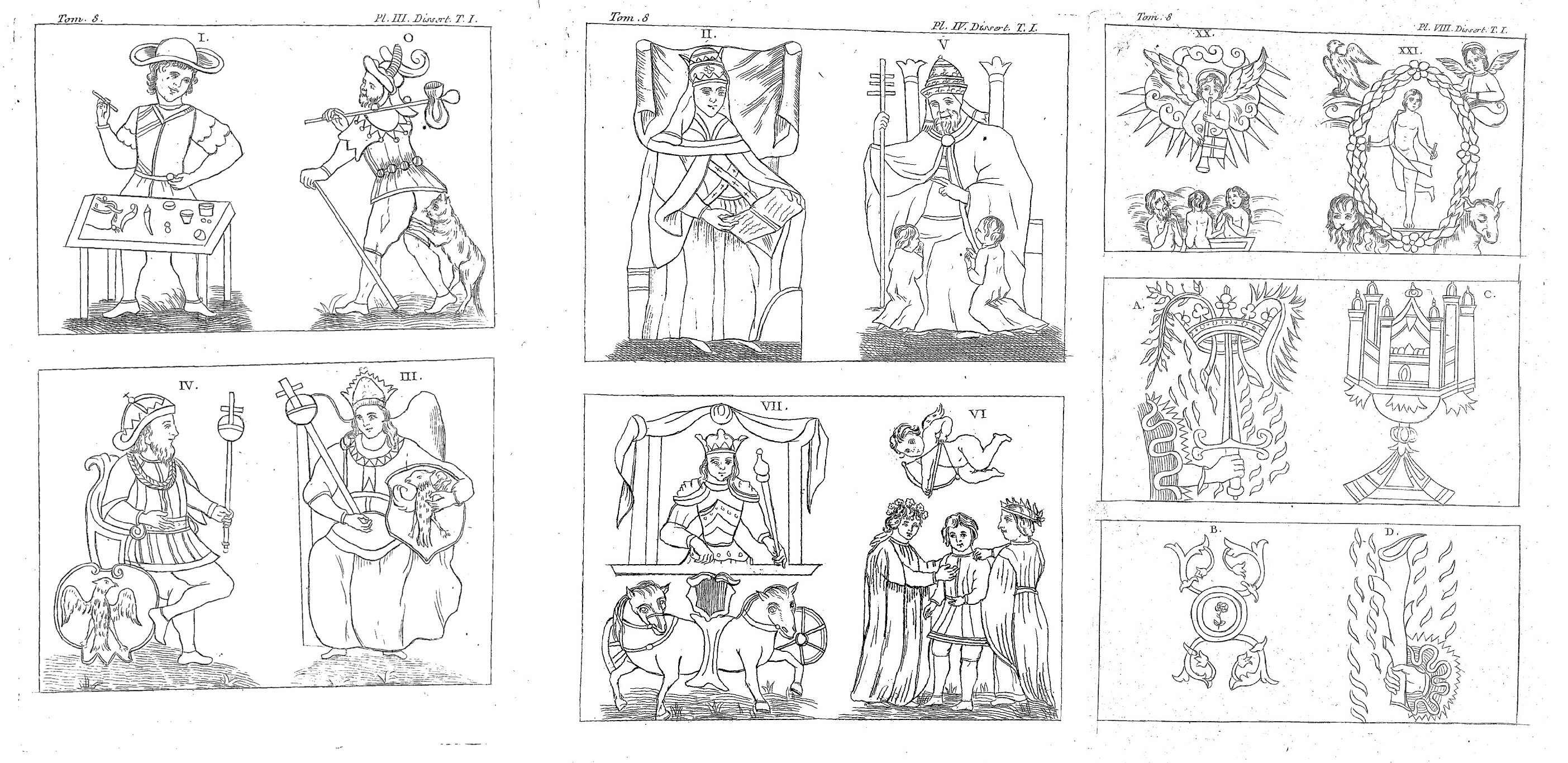
Antoine Court de Gébelin published in 1781 his encyclopedic text Le Monde primitif, analysé et comparé avec le monde moderne (‘The Primitive World, a
International Tarot Museum©
BOLOGNA AND THE TAROT
ARCHIGINNASIO LIBRARY
STABAT MATER
Piazza Galvani, 1
24 November 2021
5:30 pm
Presentation of the volume
BOLOGNA AND THE TAROT
An Italian Renaissance Heritage
HISTORY ART SYMBOLISM LITERATURE
Presented by Andrea Vitali
Speakers:
Alberto Beltramo - Morena Poltronieri - Ernesto Fazioli
www.mutusliber.it
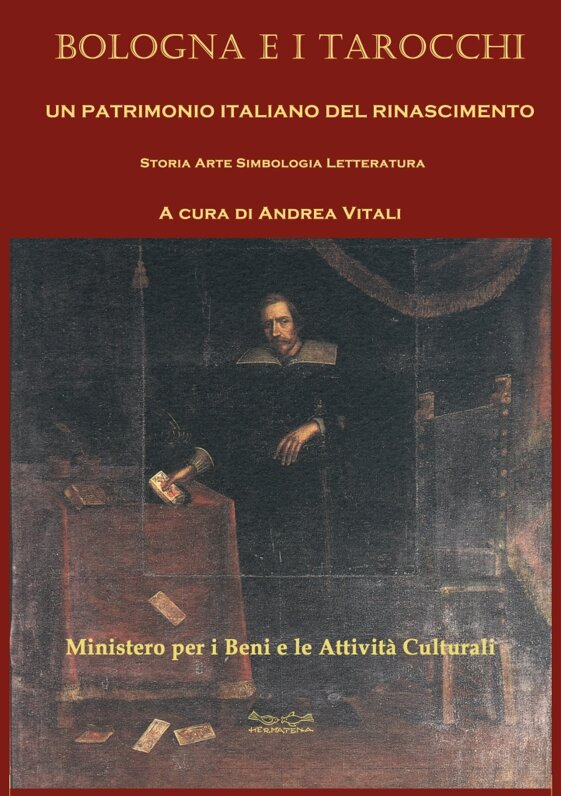
Currently, many of the historians recognized at the academic level as leading experts on the subject attribute the origin of tarot cards to the city of Bologna. For this reason, the publishers felt the need to publish this volume which, in an exhaustive manner and through largely unpublished documents, presents the close relationship that connects these cards to Bologna. Tarot cards exert a remarkable attraction worldwide, for the art with which they have been and continue to be made, for their philosophical content, as well as their literary, psychological, and anthropological aspects. A cultural phenomenon that spread from Bologna to the world and for which there is a felt need for the world to know about.
OUR MUSEUM
SOCIAL
CONTACT US
ADDRESS
Tarot Museum is part of Mutus Liber, a non-profit cultural association
Via Arturo Palmieri, 5 Riola
40038 Vergato (Bologna) Italy
Tel. 3349975005
Tax Code 91368630371 - VAT No. 03386331205
REA BO-554574
Pec: mutusliber@pec.mutusliber.it
International Tarot Museum/Mutus Liber
Via Palmieri 5
Riola Vergato (Bologna)
40038 - Tax Code 91368630371 - VAT Number 03386331205
Italy
International Tarot Museum©